Gwanghwamun Gukbap: A Seoul Local's Review
A Seoul local's review of Gwanghwamun Gukbap: pork soup prices, the taste, how the lunch queue works and eating alone.
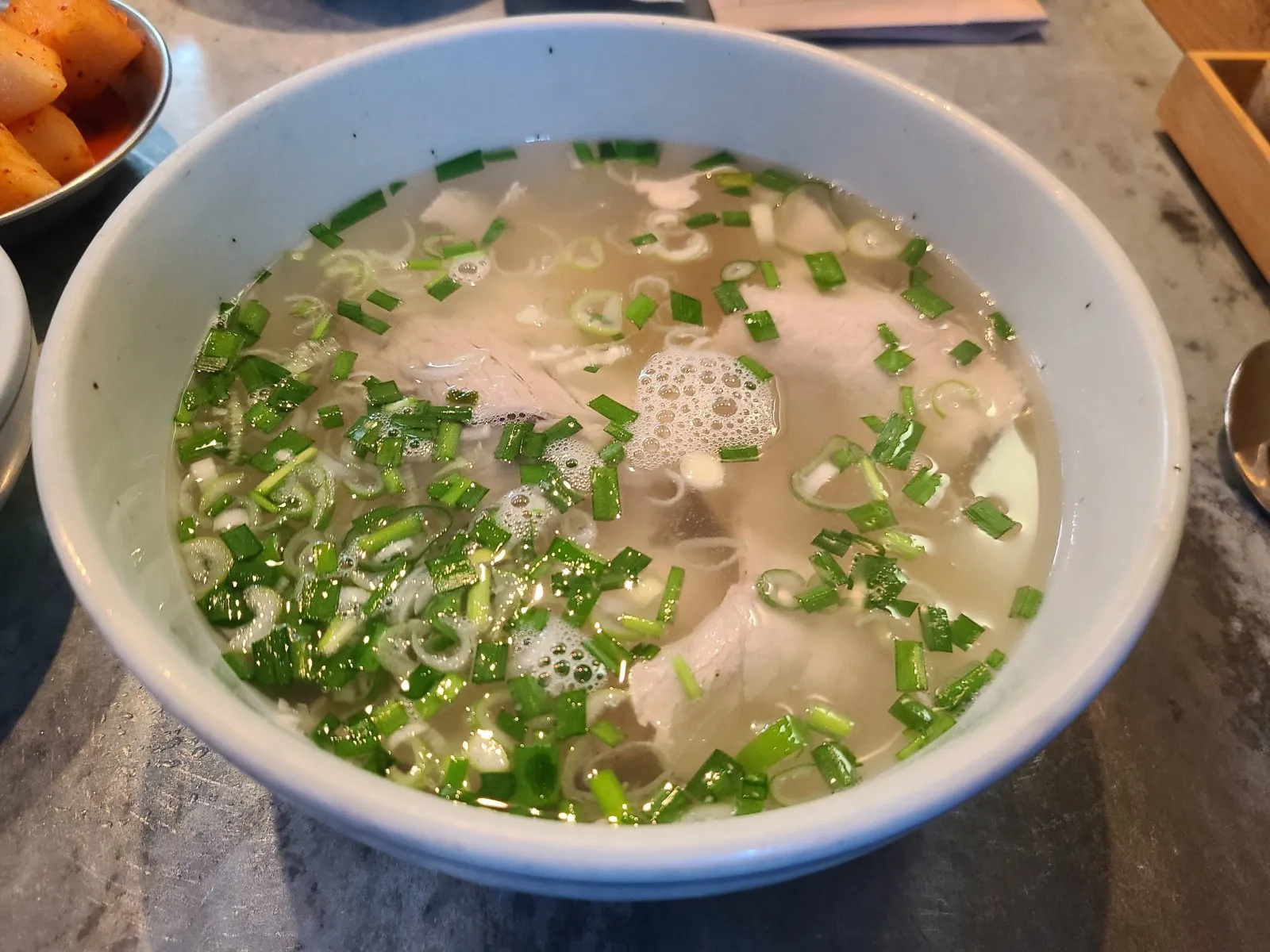
Gwanghwamun Gukbap is a pork soup place I go to 4 or 5 times a year for my office lunch. I’m Korean and I work in an office in Seoul, so this isn’t a tourist list. It’s where I actually go when I can’t decide what to eat.
It has also been in the MICHELIN Guide Seoul for 8 years in a row, from 2019 to 2026, and it was a Bib Gourmand pick for 7 of those years (2019 to 2025). Bib Gourmand isn’t a star. It’s Michelin’s list of places with good food at a fair price.
If you’re visiting Seoul in the cold months and want something warm, this is the place I’d tell you about first. The broth isn’t heavy. It’s clean and nutty, and there are slices of boiled pork (suyuk) in it, so it’s an easy first bowl of Korean soup even if you’ve never had one.
What is gukbap?
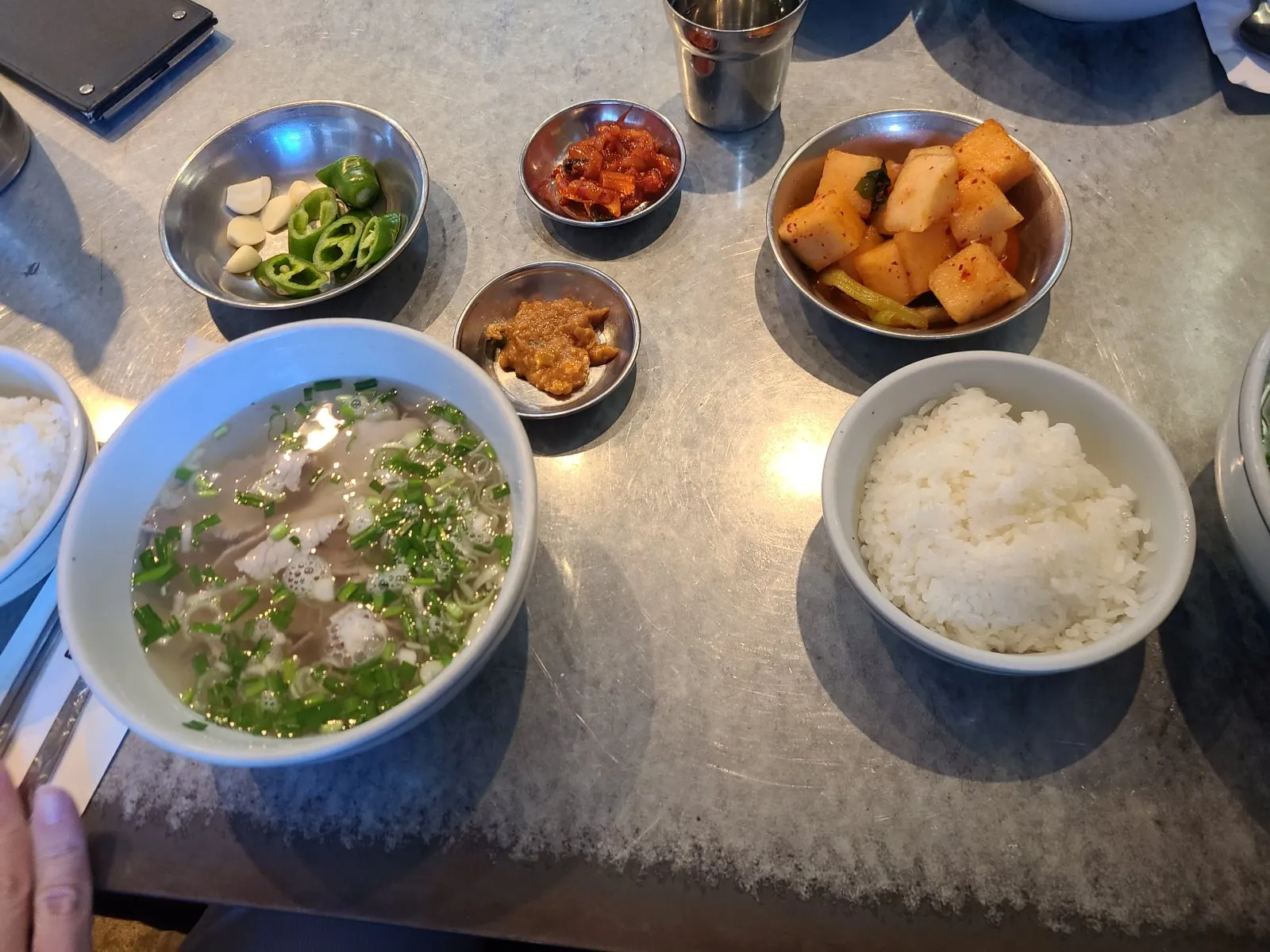
Gukbap (국밥) means “soup with rice.” You get a big bowl of soup and a bowl of rice, and you eat them together. Some people put the rice into the soup and some eat it on the side. Both are normal. Dwaeji gukbap (돼지국밥) is the pork version.
At Gwanghwamun Gukbap the regular pork soup is 12,000 won. I always get the “teuk” (특, large) for 15,000 won. Teuk has more meat in it, so if you’re hungry, it’s worth the extra 3,000 won. The side dishes come in small bowls and you don’t pay extra for them.
The broth is clean, not heavy
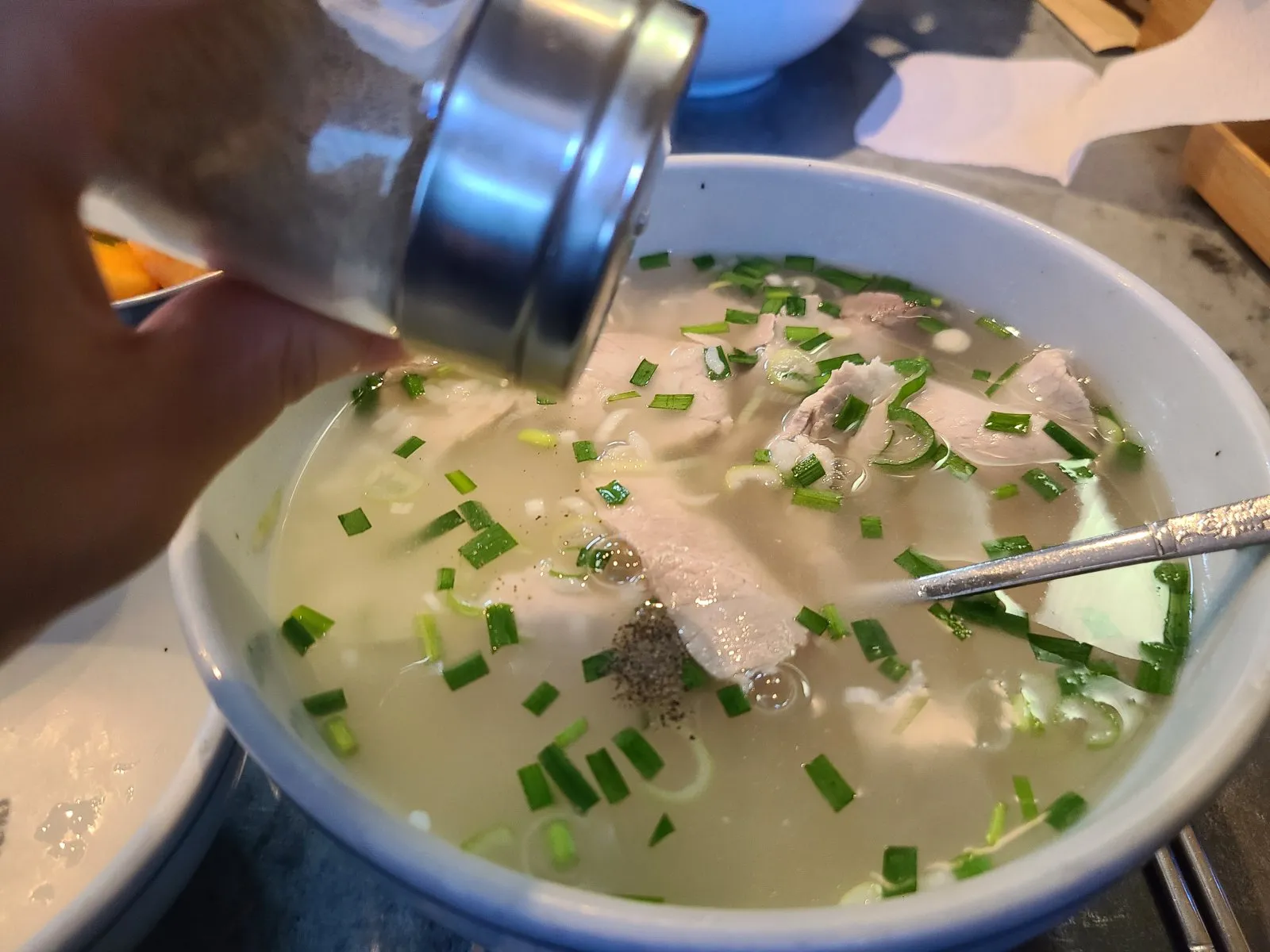
When Koreans say dwaeji gukbap, many people think of a thick, milky broth. This one is different. It’s lighter and clearer, and the taste is savory and clean. There’s a lot of green onion on top and thin slices of pork inside. I added a little black pepper, which is on the table.
That’s why I recommend it to people from other countries. If you want to try Korean soup but you’re worried it’ll be too strong, this is a good one to start with.
The pork is Korean
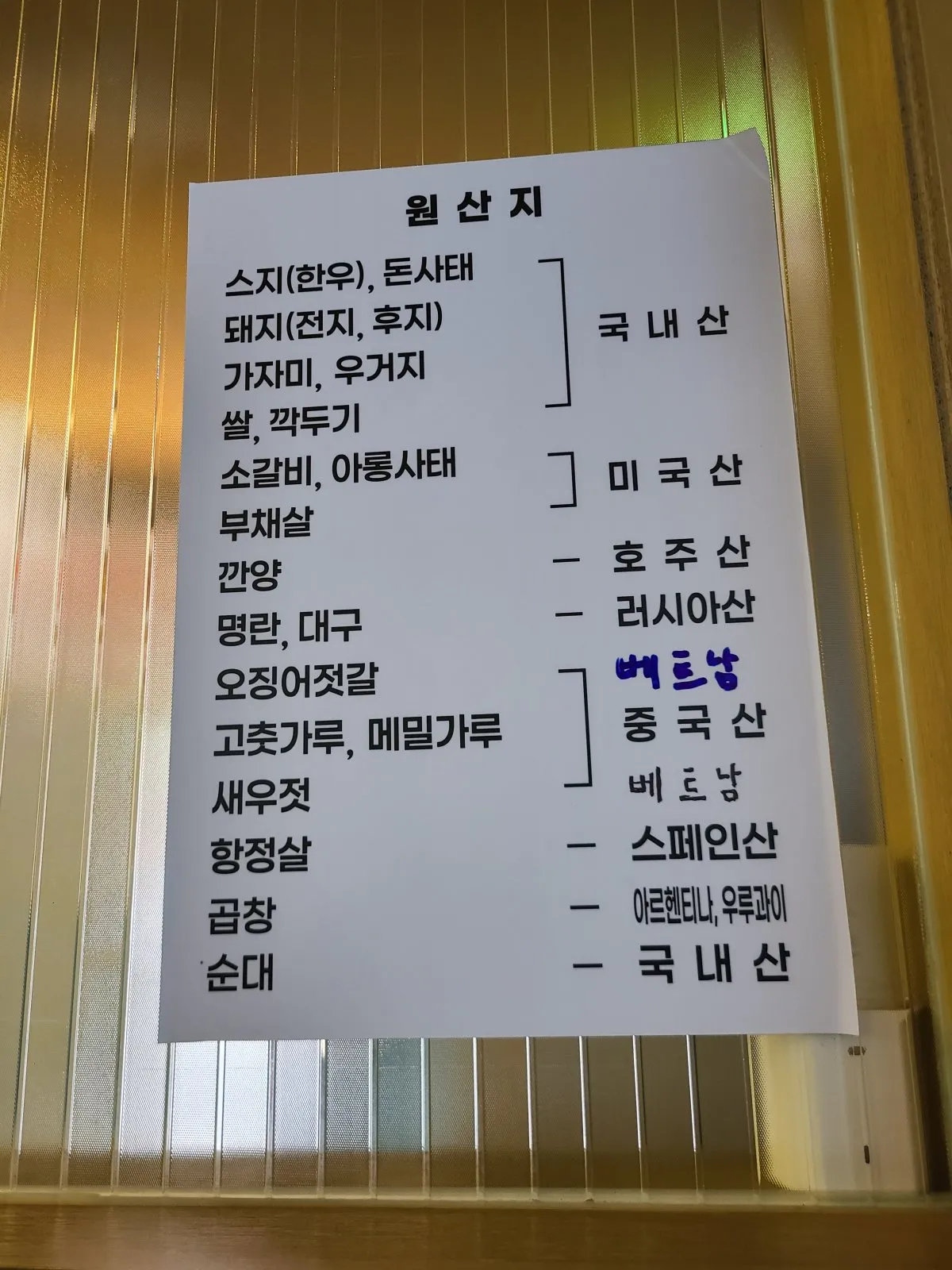
Korean restaurants have to show where their ingredients come from, so there’s a sign on the wall. It says the pork in the soup (shoulder and leg) is Korean, and so are the rice and the kkakdugi. Some other dishes use beef from the US and pork neck from Spain.
Side dishes
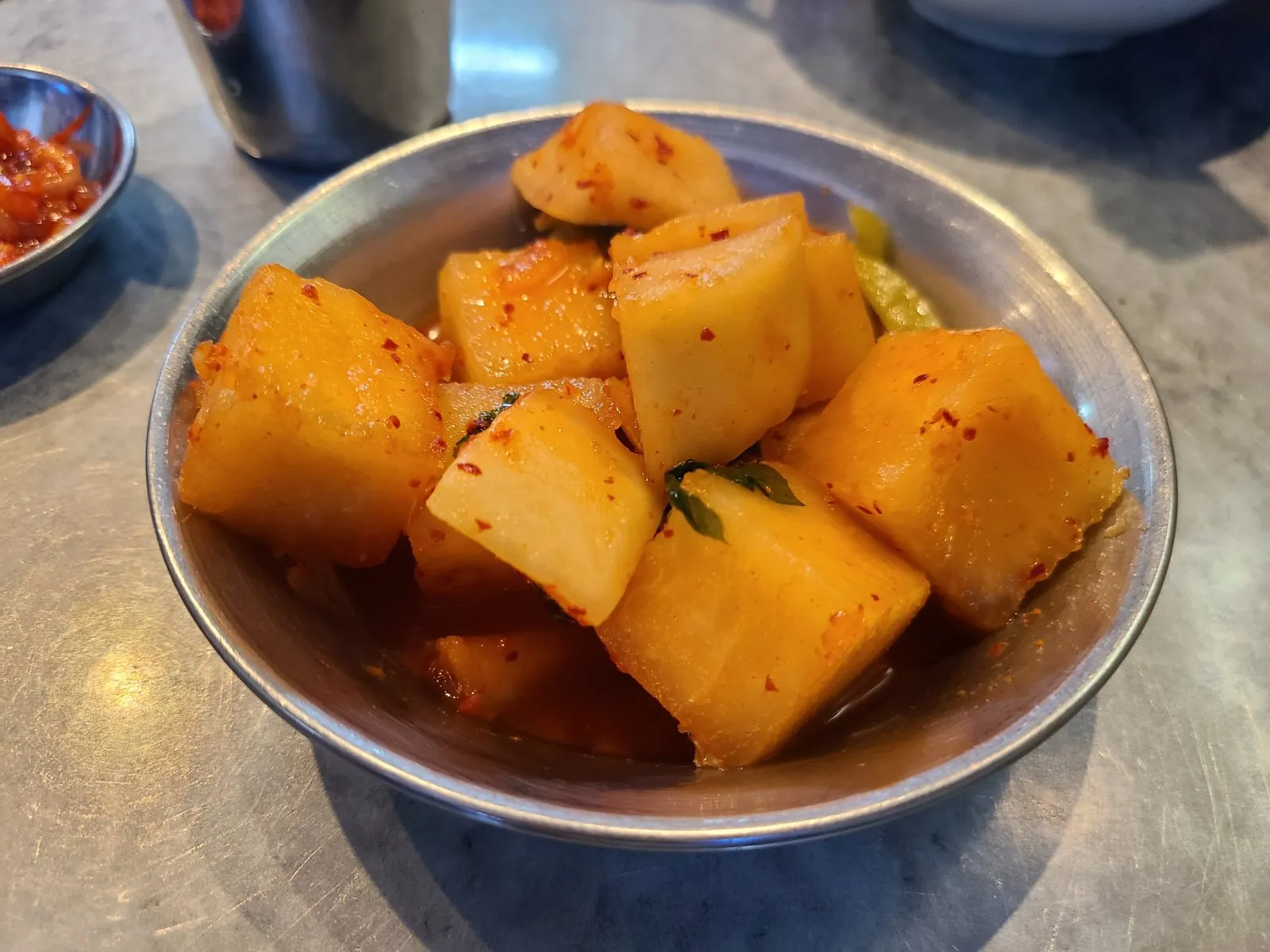
Side dishes are free in Korean restaurants, and that’s the case here too. Water is free as well, so you don’t need to order a drink. Kkakdugi (깍두기) is radish kimchi cut into cubes. Here the cubes are big. It’s crunchy and a little sweet and sour, and Koreans almost always eat it with gukbap.
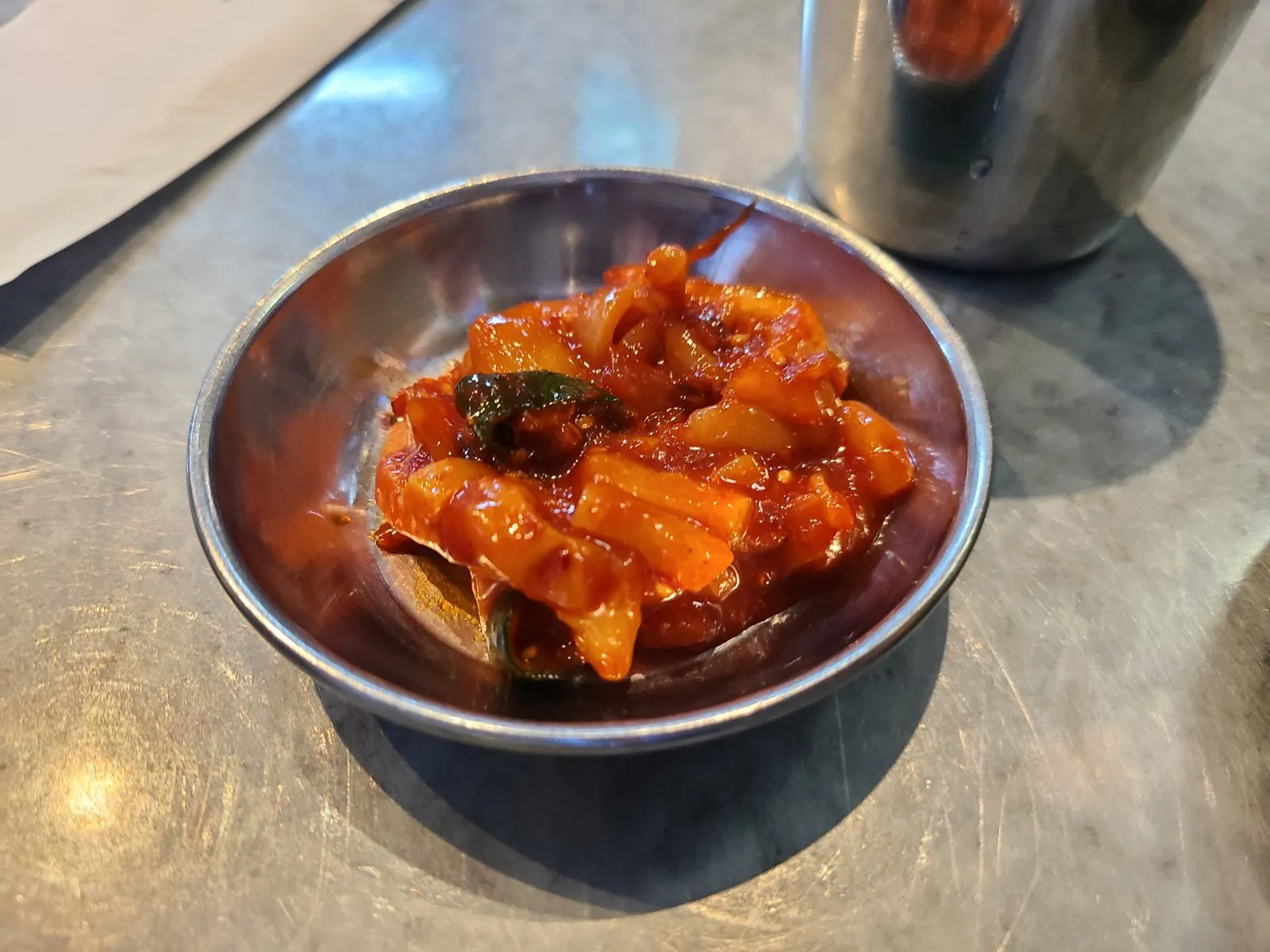
There’s also a red side dish that looks like squid jeotgal (salted squid). The origin sign lists squid jeotgal, so I think that’s what it is. It’s salty, so just a little with your rice is enough.
The lunch queue moves fast
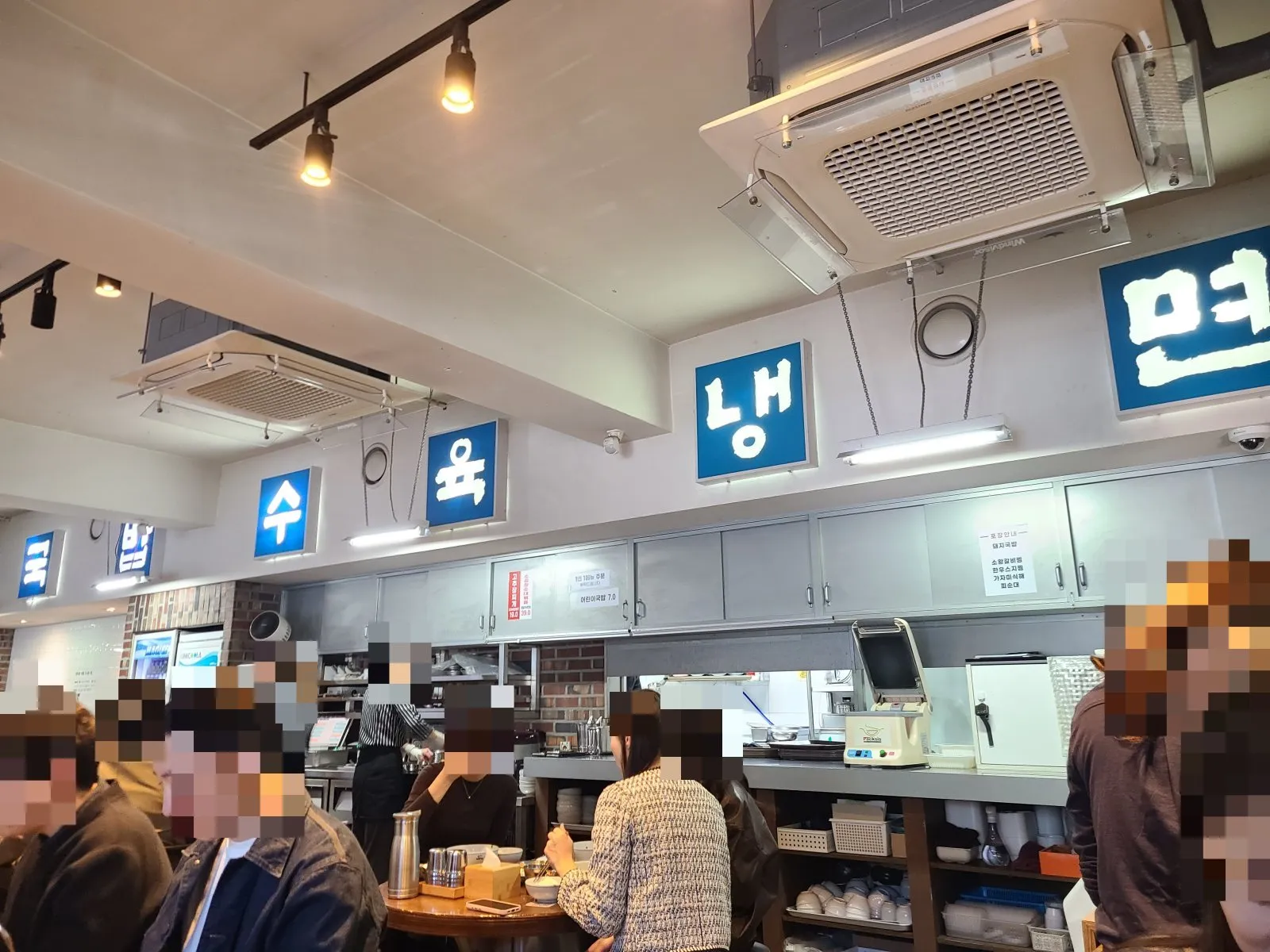
At lunchtime there’s a long line of office workers. Don’t let it scare you. It moves quickly, and I usually wait about 10 minutes.
Here’s the one thing you really need to know. When it’s your turn, the staff lady will call you. Koreans call her “imo” (이모), which means “aunt,” and it’s how people politely call the women who work in local restaurants. If you’re not standing there when she calls, she just moves on to the next person. So once you’re in line, stay in your spot.
Inside it looks like this, packed. The big blue signs on the wall say gukbap (국밥), suyuk (수육, boiled pork) and naengmyeon (냉면, cold noodles), so even if you can’t read Korean, you can point at what you want.
Eating alone is totally fine
In Korea, gukbap is the kind of meal people often eat alone. You’ll see a lot of people eating by themselves here at lunch, so you won’t feel out of place. Koreans even have a word for it: honbap (혼밥), eating alone.
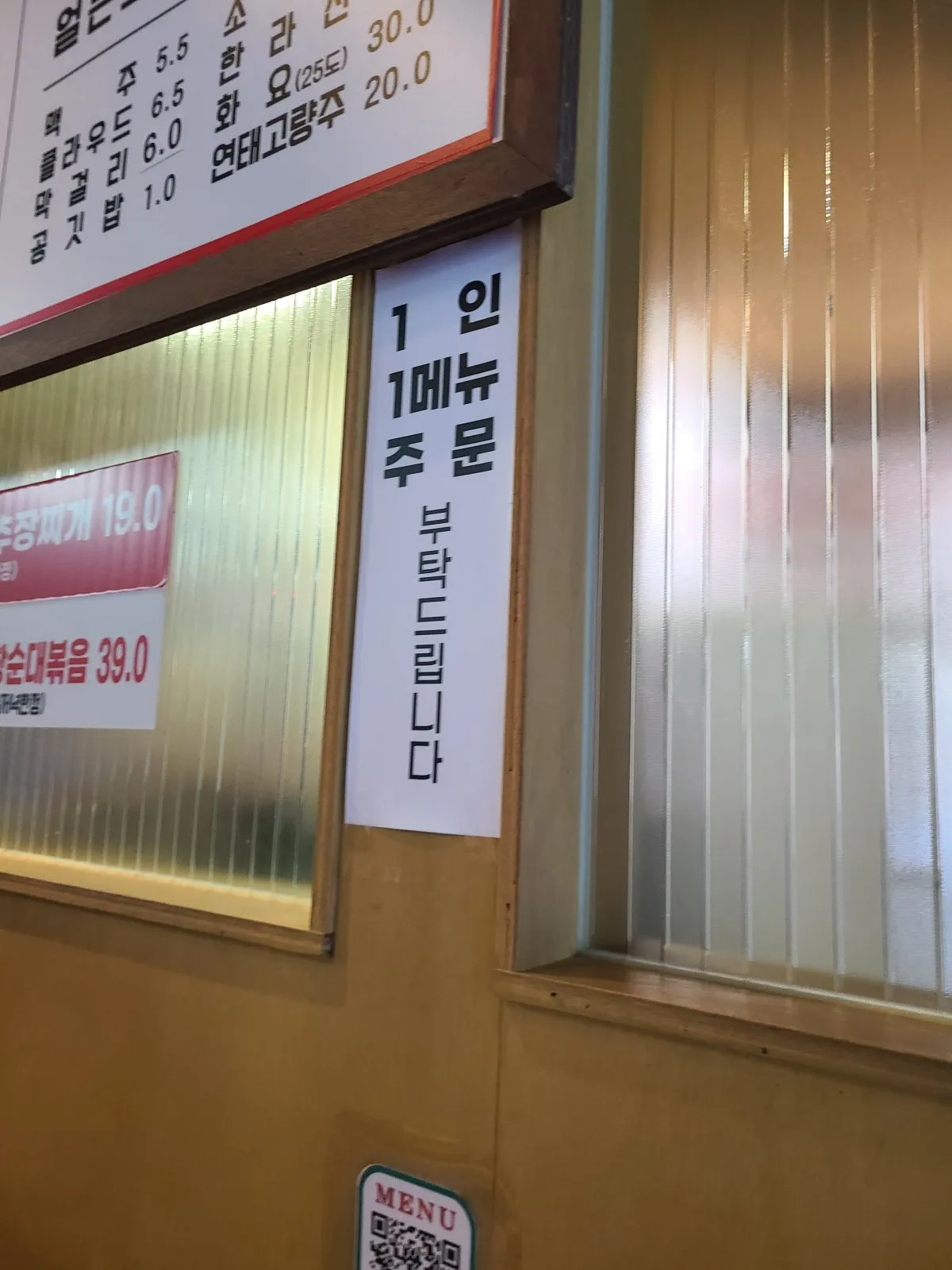
One rule: there’s a sign that says “1인 1메뉴,” which means one menu item per person. If you come with friends, everyone has to order their own dish. You can’t order one bowl and share it.
They also have drinks. The board says beer is 5,500 won, Cloud beer 6,500 won and makgeolli (rice wine) 6,000 won. An extra bowl of rice is 1,000 won.
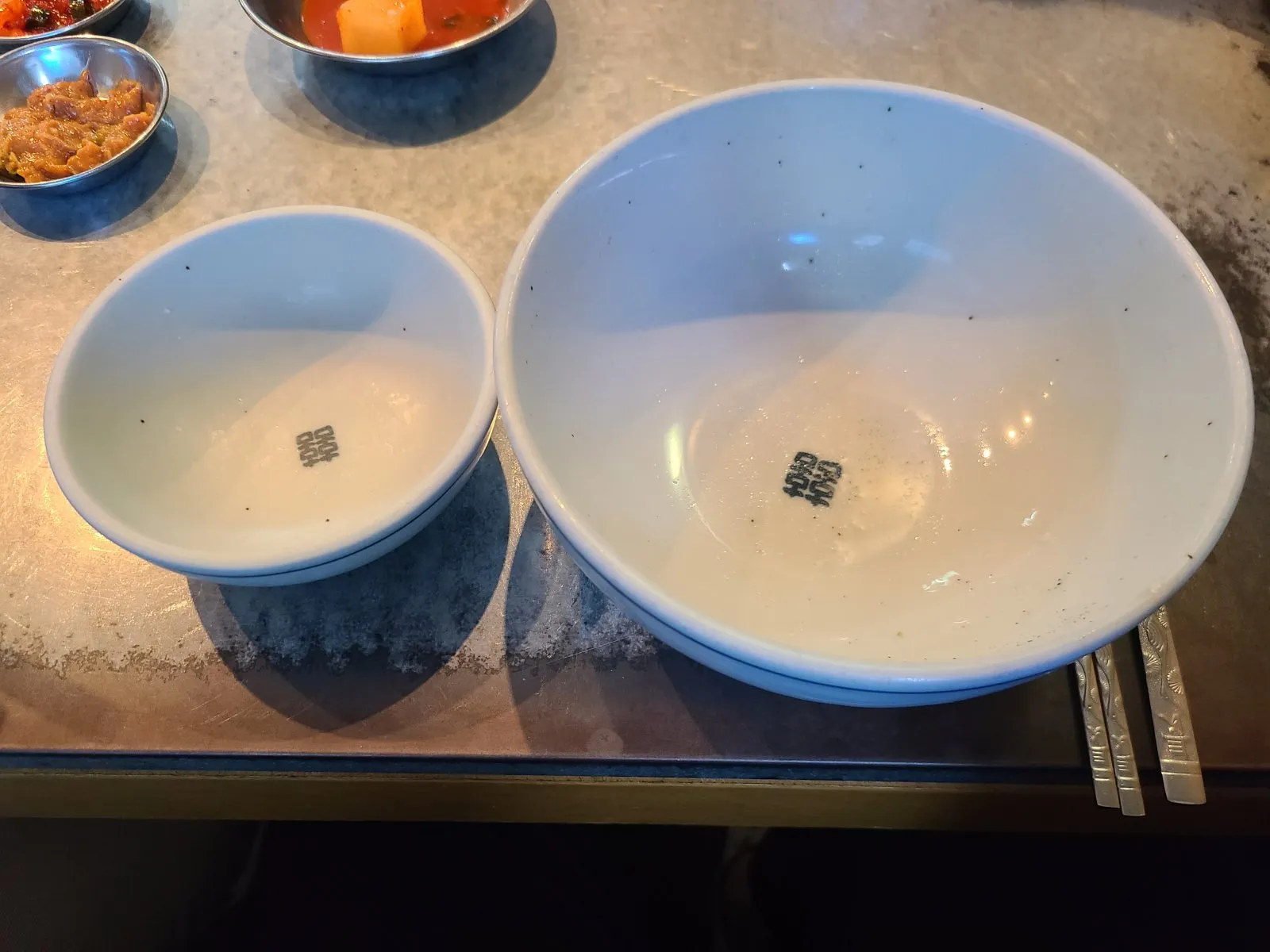
I finished everything, even the broth.
Try the pisundae too
I’ve also had their pisundae (피순대), Korean blood sausage. I didn’t take a photo that day, but it was really, really good. If you’re with someone, order one soup each and add pisundae to share. You can also take it to go. The takeout sign lists pork soup, braised short ribs, beef tendon, gajami sikhae (fermented flatfish) and pisundae.
Location and hours
The address is 53 Sejong-daero 21-gil, Jung-gu, Seoul (서울 중구 세종대로21길 53). If you take a taxi, show the driver the Korean address. The restaurant is known as the place run by chef Park Chan-il.
According to the MICHELIN Guide page for Gwanghwamun Gukbap, it’s open 11:00 to 21:30 on weekdays and 12:00 to 20:30 on Saturdays. It’s closed on Sundays. The Michelin page also mentions long queues on weekday lunch, which matches my experience. Hours can change, so check Gwanghwamun Gukbap on Naver Map before you go. Naver Map works much better than Google Maps in Korea.
Would I go back?
I go 4 or 5 times a year, and I’ll keep going for lunch.
The broth is savory and clean, so I never feel heavy after. Even if the line looks long, it moves fast. If it’s cold out and you want something warm in Seoul, go to Gwanghwamun Gukbap. Just remember to stay in line until the imo calls you.